
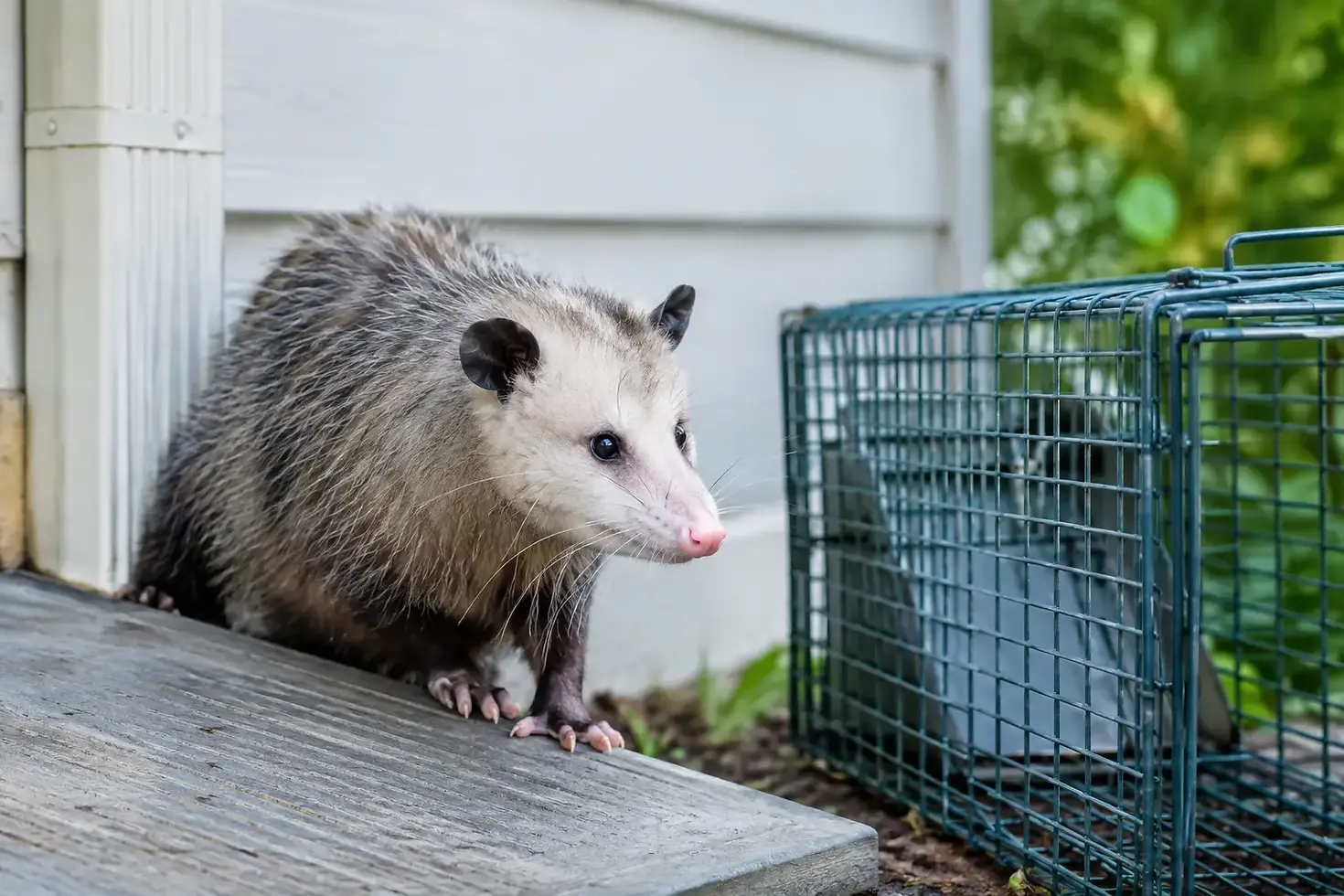
How to Remove Opossums Humanely From Your Home
Welcome, neighbors - CritterJimm here, Certified Wildlife Agent at American Wildlife Agents. If an opossum is scratching in your attic, sheltering beneath a deck, or leaving droppings around your building, you want it handled without unnecessary harm and without leaving your property open for another animal. Knowing how to remove opossums humanely means addressing both sides of the problem: safely getting the animal out and correcting the conditions that allowed it inside.
Opossums are common in Central Florida because our neighborhoods offer shelter, food sources, and plenty of protected spaces. They are not trying to cause trouble, but a frightened animal in a crawlspace, attic, shed, or commercial storage area can create sanitation concerns, odors, damaged insulation, and costly entry-point damage. A humane solution should protect the animal while restoring your peace of mind.
Start With an Inspection, Not a Trap
The first sign of an opossum problem is often nighttime noise. You may hear slow, heavy movement overhead, shuffling beneath a structure, or scratching near a vent. Droppings, disturbed insulation, torn screening, oily rub marks, and a strong odor can also point to an active animal.
Before anyone sets a trap or seals an opening, identify where the opossum is staying and how it got there. This is the step many quick fixes skip. An opening near a soffit, a broken foundation vent, loose lattice, a gap around utility lines, or deteriorated roof material may be the real problem.
A thorough inspection also helps determine whether one animal is using the area temporarily or whether there may be young inside. That distinction matters. Closing an entry point too soon can separate a mother from dependent young or leave an animal trapped within the structure. Neither outcome is humane, and both can lead to odors, damage, and a more difficult removal.
Why Exclusion Is Usually the Humane Answer
For many situations, the most effective humane removal method is controlled exclusion. Rather than simply catching an opossum and moving it elsewhere, a trained wildlife professional may use a properly placed one-way exit device. This allows the animal to leave the den area but prevents it from getting back inside.
Exclusion works best after the property has been inspected and all secondary openings have been secured. The main exit point is fitted with the device, while other access gaps are repaired with materials appropriate for the structure. Once activity has stopped and the area is confirmed clear, the final opening can be permanently sealed.
This approach is less disruptive than a trap-only response and focuses on the long-term issue: access. It also avoids the false sense of security that comes from removing one animal while leaving the same opening available for the next one.
The timing depends on the location, the animal's behavior, and whether young may be present. An attic situation, for example, requires more caution than an opossum passing through an open yard. A certified wildlife agent can evaluate the evidence and select a method that protects the structure without creating an animal welfare problem.
When Humane Trapping May Be Necessary
There are situations where exclusion alone is not practical. An opossum may be confined in an interior area, unable to leave safely, injured, or repeatedly entering a place where a one-way device cannot be installed. In those cases, live trapping by a qualified professional may be the appropriate next step.
Humane trapping is not as simple as placing a cage and walking away. Trap placement, frequent monitoring, weather exposure, location, animal condition, and Florida wildlife requirements all matter. A poorly managed trap can leave an animal exposed to heat, stress, or injury. It can also catch a non-target animal, which complicates the situation quickly.
For property owners, the safest choice is to avoid handling an opossum directly. Even a normally nonaggressive animal can bite or scratch when frightened or cornered. Keep people away from the area, limit access if possible, and let a trained agent assess the conditions. If an animal appears injured or is in an immediate dangerous location, request professional help promptly rather than attempting a hands-on rescue.
Do Not Seal the Opening Until You Know It Is Clear
One of the most common mistakes is repairing the entry point the moment an opossum is seen leaving. It may return later that night, or there may be another animal inside. More importantly, dependent young can remain hidden in insulation, beneath decking, or within wall voids.
A humane removal plan includes a clearance period. During that time, the agent watches for fresh tracks, noises, new droppings, or signs that the animal has found another route inside. Inspection tools and experience are valuable here because wildlife activity is not always visible from the ground.
After clearance is confirmed, permanent repairs can begin. The right repair is not a loose patch that can be pulled aside. It should be durable, matched to the entry location, and designed to withstand future wildlife pressure. For a home, that may mean securing vents, repairing soffits, reinforcing vulnerable roofline gaps, or restoring damaged screening. At a commercial property, it may also include addressing loading areas, storage access, utility penetrations, and exterior maintenance issues.
Remove the Conditions That Invite Opossums Back
Opossums are opportunistic. If your property provides an easy den site and repeated food access, another animal may eventually investigate the same area. Prevention does not require turning your yard or facility into a fortress, but it does require reducing the obvious attractions.
Keep garbage and food waste in secure containers, especially overnight. Pick up fallen fruit when possible, keep outdoor cooking areas clean, and avoid leaving open food sources near structures. Repair leaking outdoor fixtures, reduce dense debris near the foundation, and keep crawlspace access points in good condition.
Pay special attention to low, sheltered areas. Open spaces beneath decks, additions, sheds, and portable buildings are attractive because they offer shade and cover. Properly installed barriers can prevent access, but only after confirming that no animal remains underneath. Blocking an active den site is a problem, not a prevention measure.
Protect Your Health and Your Property During Cleanup
Once the opossum has been removed and the entry point is secured, cleanup should not be an afterthought. Waste, nesting material, and contaminated insulation can retain odor and may attract other wildlife. In enclosed areas, contamination can affect air quality and leave a lingering reminder of the problem long after the animal is gone.
Use care around droppings and soiled materials. Avoid sweeping dry waste into the air or reaching into dark voids without knowing what is there. Professional cleanup may be warranted when contamination is extensive, insulation is damaged, or an animal died in a concealed area.
This is where a complete wildlife service has real value. Removal, exclusion, repair, and cleanup work together. Handling only the visible animal can leave you with the same access point, the same contamination, and the same uncertainty a few weeks later.
When to Call a Certified Wildlife Agent
A single opossum crossing through a yard usually needs no intervention. But call for professional help when one is inside a structure, repeatedly using a crawlspace or attic, causing visible damage, trapped in an unsafe location, or producing strong odors and sanitation concerns.
For Orlando-area homes and commercial properties, American Wildlife Agents approaches opossum concerns as a full property-protection issue. The goal is not merely to make the animal disappear. It is to inspect the structure carefully, remove the animal responsibly, verify clearance, repair vulnerable entry points, and help reduce the chance of another intrusion.
A humane result is one where the opossum is handled with care and your property is no longer an easy place to enter. Fear no more - the right response protects both your home or business and the wildlife trying to find shelter.


Comments