
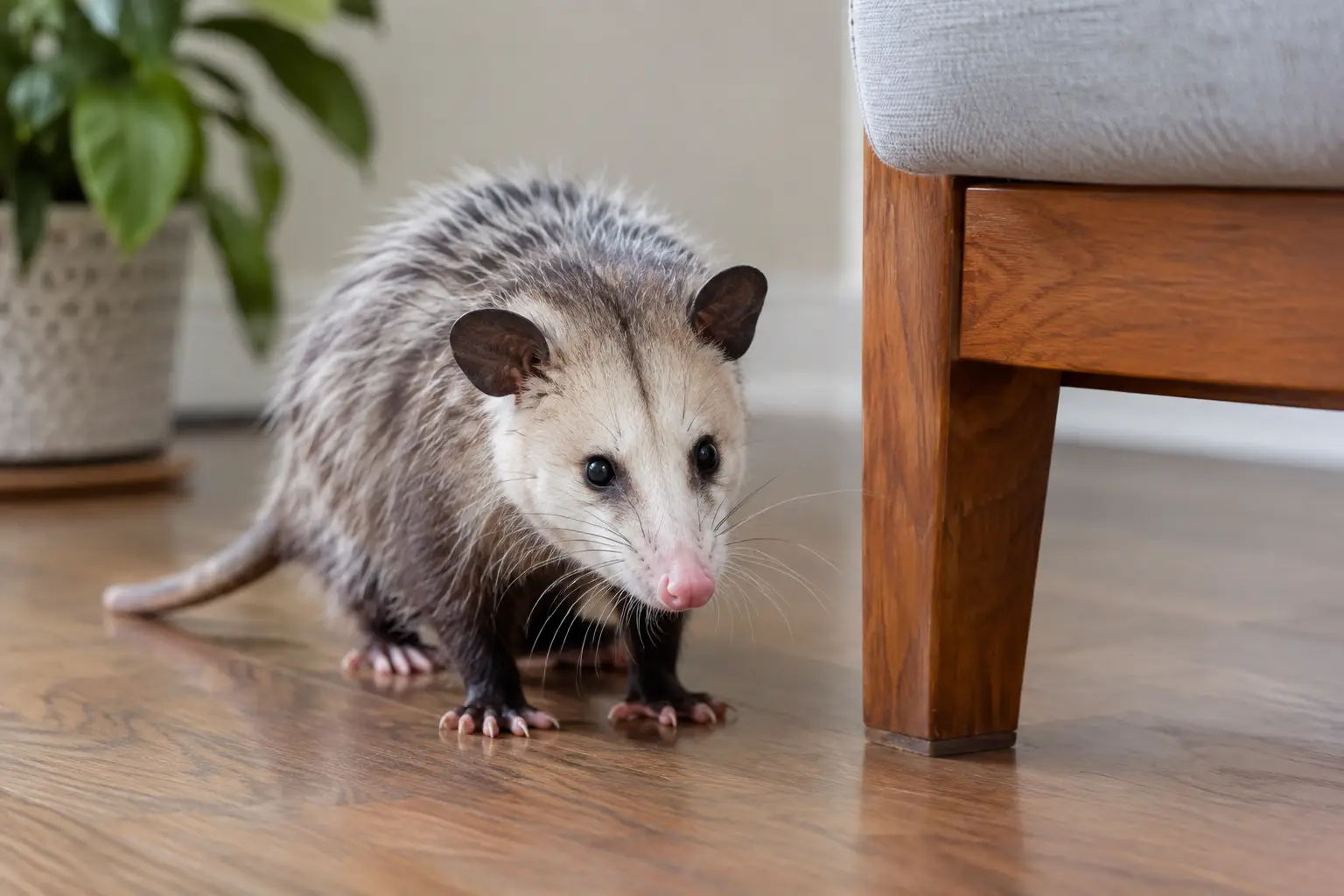
Are Opossums Dangerous Indoors? What to Do
Welcome from CritterJimm, Certified Wildlife Agent at American Wildlife Agents. Finding an opossum in a hallway, laundry room, attic, or storage area can turn a normal day into a stressful one fast. Are opossums dangerous indoors? Usually, they are not looking for a confrontation, but an opossum inside a home or business still creates real sanitation, safety, and property concerns that deserve prompt attention.
Opossums are generally shy, nocturnal wildlife. When startled, they may hiss, show teeth, or freeze in place. Those defensive behaviors can look alarming, yet they usually want an escape route rather than a fight. The greater concern is not aggression. It is what happens when wildlife has access to the enclosed spaces where people live, work, store belongings, or manage food.
Are Opossums Dangerous Indoors?
An opossum can become dangerous indoors when people try to corner, touch, or remove it without proper training. Any frightened wild animal can bite or scratch when it feels trapped. Keep children and other occupants away from the area, avoid direct contact, and do not attempt to pick it up with towels, boxes, or household tools.
The more common hazards are contamination and hidden damage. Opossums can leave droppings and urine in attics, crawlspaces, wall voids, garages, and storage areas. Contaminated insulation, ceiling materials, and stored items may require specialized cleanup. A deceased opossum in a wall or attic can also cause persistent odor and moisture-related damage if it is not located and removed correctly.
Although opossums have a lower likelihood of carrying rabies than many other nuisance wildlife species, lower risk does not mean no risk. They may carry parasites and bacteria that can be spread through waste or contact with contaminated surfaces. If anyone has been bitten or scratched, wash the affected area immediately with soap and water and seek medical guidance without delay.
Why Opossums Enter Florida Properties
In Central Florida, opossums often move through neighborhoods and commercial areas in search of shelter, water, and accessible food sources. A property can look secure from the ground while still offering an easy entrance through a damaged vent, loose soffit, uncapped chimney, construction gap, open crawlspace access, or weakened roofline.
Once inside, an opossum may settle in a quiet space that stays dark and protected during the day. Attics, sheds, garages, utility rooms, and suspended ceilings can all provide temporary cover. In some cases, the animal enters accidentally through an open door and cannot find its way back out. In others, the indoor sighting is evidence of a larger access issue that has been developing for weeks or months.
That distinction matters. Letting one opossum leave may resolve an accidental entry, but it does not solve a damaged opening that remains available to the next animal. A complete solution begins by identifying how access occurred.
What to Do If an Opossum Is Inside
If the opossum is in a room with a clear exterior exit, create space rather than pressure. Keep people out of the room, close interior doors to limit movement through the property, and give the animal a calm path toward an open exterior door if that can be done safely from a distance. Turn off loud televisions or music nearby and avoid chasing it.
Do not block the animal into a tighter space, strike at it, or use chemicals or smoke in an attempt to force it out. These reactions can make the situation more unpredictable and may drive the opossum deeper into the structure. An animal that disappears behind cabinets, appliances, walls, or ceiling materials is much harder to remove safely.
If the opossum is in an attic, crawlspace, wall void, commercial storage area, or another inaccessible place, professional assessment is the safer route. A certified wildlife agent can determine whether the animal is still present, identify the entry point, and create a removal plan that protects both the property and the people using it.
Signs the Problem Is Bigger Than One Indoor Sighting
One encounter does not always mean a long-term infestation, but certain signs point to an established entry problem. Repeated nighttime sounds above ceilings, new staining around vents, disturbed insulation, droppings in the same area, foul odors, or visible gaps along the roofline should not be ignored.
Property managers should also watch for recurring activity near dumpsters, loading areas, utility penetrations, and roof access points. Commercial buildings often have multiple hidden voids and service entrances, which makes a thorough inspection especially valuable. Quick removal without repair can create a cycle of repeat calls, disruption, and escalating cleanup costs.
An inspection should look beyond the place where the opossum was seen. The goal is to identify travel routes, structural vulnerabilities, contamination, and any damage that needs repair. This is the difference between simply moving a problem and protecting the building from future intrusion.
Removal Is Only Half the Solution
Humane, target-specific removal is an important first step, but it should be paired with exclusion. Exclusion means professionally closing the openings that allowed wildlife to enter while making sure an animal is not sealed inside. Timing and technique matter, particularly when an opossum may be using a sheltered area for an extended period.
After removal, the affected space should be evaluated for waste, damaged insulation, compromised vents, and structural wear. Cleanup is not merely cosmetic. Waste left in enclosed spaces can create odors and expose occupants or maintenance personnel when they enter the area later.
At American Wildlife Agents, our approach is built around inspection, target-animal removal, entry-point sealing, damage repair, and prevention. Rather than charging by the number of animals encountered, a complete service plan focuses on resolving the conditions that made access possible in the first place.
When to Call for Professional Help
Call a professional wildlife removal provider promptly if the opossum is trapped inside, has entered an attic or wall, appears injured, cannot be safely given an exit path, or has left waste in an occupied area. Immediate help is also wise when you notice repeated activity or do not know how the animal got in.
A trained team can handle the situation without turning a manageable wildlife issue into a damaged ceiling, contaminated storage space, or a dangerous close-contact encounter. For Orlando-area homes and commercial properties, a detailed inspection can also reveal weaknesses that are easy to miss from a ladder or ground-level walkaround.
The best next step is simple: keep your distance, protect the indoor space, and address the entry point as carefully as the animal itself. That measured response gives the opossum a safer outcome while giving your property the lasting protection it needs.


Comments