
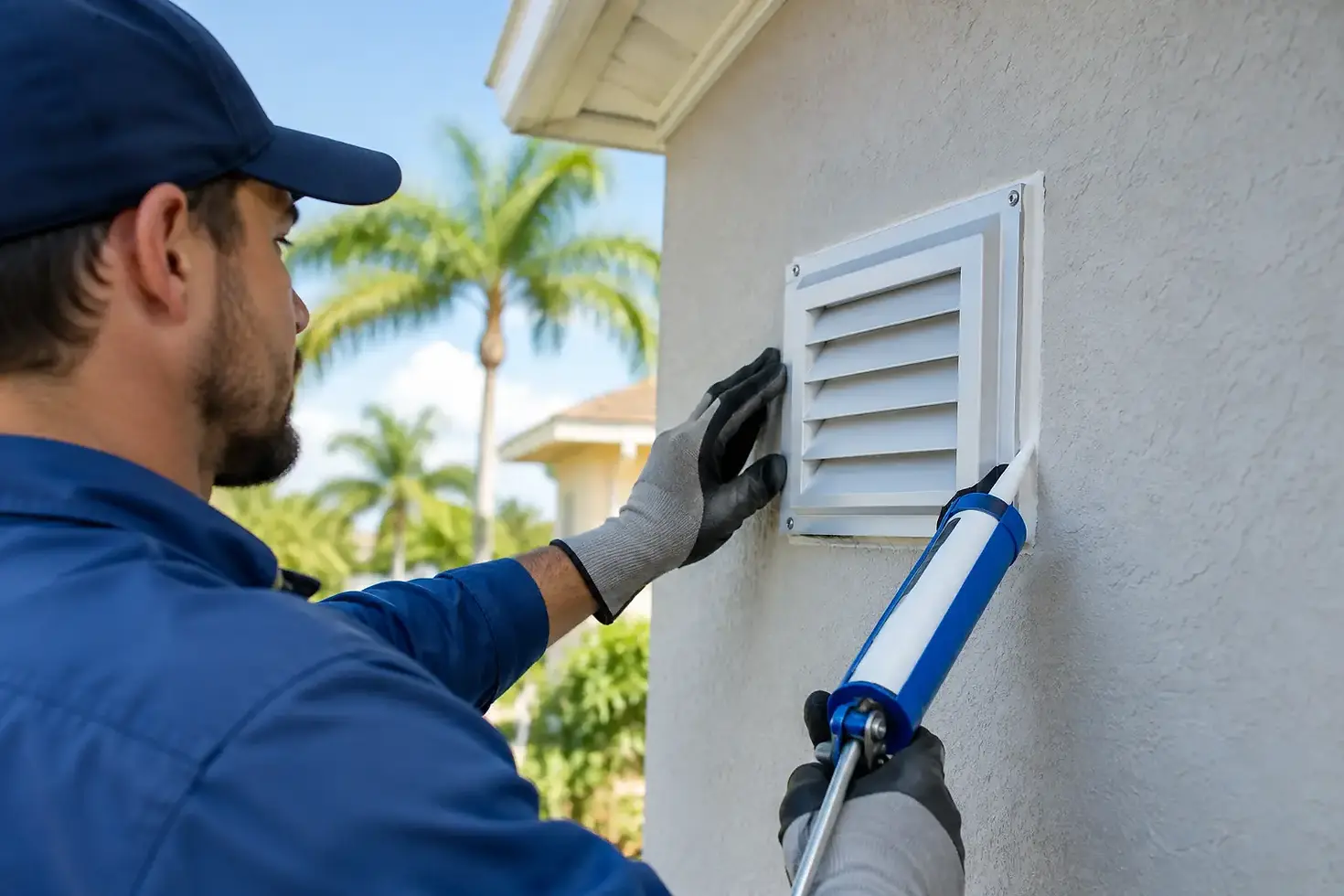
Rodent Vent Sealing for Central Florida Homes
Welcome, I’m CritterJimm, Certified Wildlife Agent with American Wildlife Agents. A vent that looks like a minor exterior detail can become a direct route into an attic, crawl space, wall cavity, or commercial ceiling void. Rodent vent sealing is how we close that route correctly - without restricting the ventilation your property needs or trapping an animal inside.
For Central Florida property owners, this work is about more than stopping scratching sounds overhead. An open, bent, rusted, or poorly screened vent can lead to contaminated insulation, damaged ductwork, odors, chewed wiring, and repeat intrusions. The most effective solution starts with identifying where activity is happening, removing the animals already using the structure, and then securing every realistic entry point.
Why vents become a common entry point
Vents are designed to move air, not keep determined wildlife out. Soffit vents, gable vents, roof vents, dryer vents, foundation vents, and louvered openings can all become vulnerable when the original screen degrades or the cover is loose. In Florida’s heat, humidity, frequent storms, and intense sun, materials can warp, corrode, crack, or pull away from the structure faster than many owners expect.
A small opening may be all an animal needs. Once access is established, the area behind the vent offers shade, concealment, and a protected path farther into the building. Attics are especially attractive because insulation can be disturbed for nesting, while HVAC lines and wiring can be exposed to damage.
The visible opening is not always the whole story. A roofline gap near a vent, a separated soffit panel, or a loose fascia board may be the actual access point. That is why placing a screen over the most obvious hole without a full inspection can leave the property exposed.
Rodent vent sealing starts with a real inspection
A proper exclusion plan begins at ground level and continues around the entire structure. Certified wildlife agents look for rub marks, droppings, staining, chewed edges, displaced screening, damaged trim, and travel paths along utility lines, roof intersections, and eaves. Inside, inspection may include the attic, crawl space, mechanical rooms, storage areas, and accessible ceiling cavities.
We also consider whether the opening is active. Fresh debris below a vent, new scratching sounds, disturbed insulation, or recent damage may indicate an animal is still entering and exiting. Sealing an active opening too soon can create a more difficult situation inside the structure. An animal that cannot leave may move deeper into walls or ceilings, causing new damage and leaving behind odor concerns.
For this reason, exclusion and removal work must be coordinated. The right sequence depends on the species involved, the number of access points, the season, the building design, and whether young animals may be present. There is no responsible one-size-fits-all repair.
The goal is exclusion, not just a cover
A vent cover is only useful when it is securely installed, sized for the opening, and paired with repairs to the surrounding material. Weak screening, temporary patches, or materials that can be easily pulled loose may create a false sense of security. Expanding foam alone is not a reliable exterior barrier for active wildlife pressure, especially around vents where airflow and weather exposure matter.
Professional rodent vent sealing typically uses durable, wildlife-resistant materials selected for the vent type and location. The installation should preserve required airflow while preventing access around the edges, behind louvers, or through damaged framing. On older properties, repairs may also be needed to restore loose soffits, failing trim, roofline gaps, or deteriorated vent housings.
Appearance matters, too. A well-planned repair should protect the property without leaving it looking patched together. For homeowners, that supports curb appeal and property value. For commercial facilities, it helps maintain a clean, professional exterior while reducing future maintenance disruptions.
Signs your vent protection may be failing
Property owners often notice the problem first as sound. Movement in an attic, walls, or ceiling is a reason to schedule an inspection, particularly when it happens repeatedly at similar times. Other signs include insulation scattered near an attic vent, debris collecting beneath exterior openings, dark grease-like marks around access points, unusual odors, or visible damage to screens and louvers.
Outside, look carefully at vents near rooflines and upper stories. These areas are easy to overlook from the ground. A screen may appear intact but be detached along one edge. A vent may have a gap where the surrounding siding or soffit has shifted. Storm damage can also expose a weakness that was not present during the last visual check.
Do not assume a quiet attic means the issue is gone. Animals may have changed their schedule, moved into another section of the structure, or temporarily stopped using one opening while retaining access elsewhere. An inspection provides clearer answers than waiting for activity to become obvious again.
Why timing matters before sealing
The most common mistake is closing an opening as soon as it is found. If an animal is inside, sealing may turn a manageable entry issue into an interior removal problem. It can also result in additional chewing around the sealed area as the animal searches for a way out.
A professional will determine whether a targeted trapping plan, one-way exclusion device, or another removal method is appropriate before final repairs are completed. The approach should protect the building and account for the animal’s behavior. Once activity has been resolved, permanent sealing can be completed with much greater confidence.
This is also the right time to inspect all secondary gaps. Wildlife rarely relies on only one weak point forever. A structure with a damaged gable vent may also have open construction gaps at roof returns, plumbing penetrations, soffits, or foundation areas. Addressing those conditions together offers better long-term protection than returning repeatedly for one newly discovered hole at a time.
Vent sealing for commercial properties
Commercial buildings have their own challenges. Warehouses, offices, restaurants, retail centers, multifamily communities, and managed properties can have numerous roof vents, loading-area openings, utility penetrations, and equipment rooms. A single unsecured vent may affect more than one tenant space or create sanitation concerns in a shared area.
For property managers and facility operators, documentation and consistency matter. A thorough inspection identifies priorities, while a clear repair plan helps schedule work around operations and access requirements. Regular exterior checks are especially useful after severe weather, roof work, or construction activity that may disturb vent guards and exterior finishes.
The best approach balances immediate correction with preventive maintenance. High-traffic buildings may need durable repairs that stand up to greater exposure, while older properties may require broader restoration around vents before exclusion materials can be securely attached.
What homeowners can do between inspections
A property owner can help by keeping vegetation trimmed away from rooflines and exterior walls, checking visible vent covers after storms, and watching for loose soffits or damaged trim. Store materials away from the foundation when possible, and do not leave attic access areas cluttered when an inspection is scheduled.
Avoid attempting to seal an opening if you suspect current activity. Also avoid relying on a quick cosmetic patch to solve an entry problem. The cost of addressing the source correctly is generally far less than repairing widespread contamination, damaged insulation, or new openings created after an animal is blocked in.
At American Wildlife Agents, our focus is a total solution: inspection, target-animal removal when needed, exclusion, repairs, and quality-focused follow-through. Guaranteed workmanship is meaningful because it reflects a process designed to reduce repeat entry, not simply hide the evidence of it.
A protected vent should quietly do its job for years: move air where it belongs and keep wildlife outside where it belongs. If a vent looks damaged, loose, or suspiciously active, addressing it early can protect your property, your budget, and your peace of mind.


Comments