
How to Stop Snakes Entering Your Florida Home
Welcome, I’m CritterJimm, Certified Wildlife Agent at American Wildlife Agents. If you have spotted a snake near a doorway, garage, pool equipment, or inside your building, your concern is understandable. Knowing how to stop snakes entering starts with one key fact: snakes are usually following shelter, moisture, or prey. Effective prevention means changing those conditions and closing the access points that make your property easy to enter.
A snake outdoors is not always a sign of an infestation. Central Florida’s warm climate, heavy rains, landscaped yards, and water features create ideal conditions for many wildlife species. But a snake inside a home, office, storage area, or enclosed patio is a property protection issue that deserves a careful response. The goal is not a temporary scare tactic. It is a complete exclusion plan that reduces the chance of another entry.
How to Stop Snakes Entering Through Gaps and Openings
Snakes do not need a dramatic hole to get indoors. Gaps around doors, utility lines, air-conditioning penetrations, foundation vents, garage corners, and damaged screens can all become access routes. Smaller snakes can move through openings that many property owners would overlook.
Start with a slow inspection of the ground-level exterior. Check where walls meet the soil, where pipes and wiring enter the structure, and where concrete slabs connect to siding or masonry. Look closely behind outdoor equipment and around storage areas. A gap may be hidden by mulch, leaves, or an overgrown plant bed.
Doors deserve special attention. Install a tight door sweep on exterior doors and confirm that the threshold closes evenly. Replace worn weatherstripping, repair bent garage-door seals, and make sure screen doors fit their frames without open corners. If light is visible under or beside a closed door, there may be enough room for wildlife to investigate.
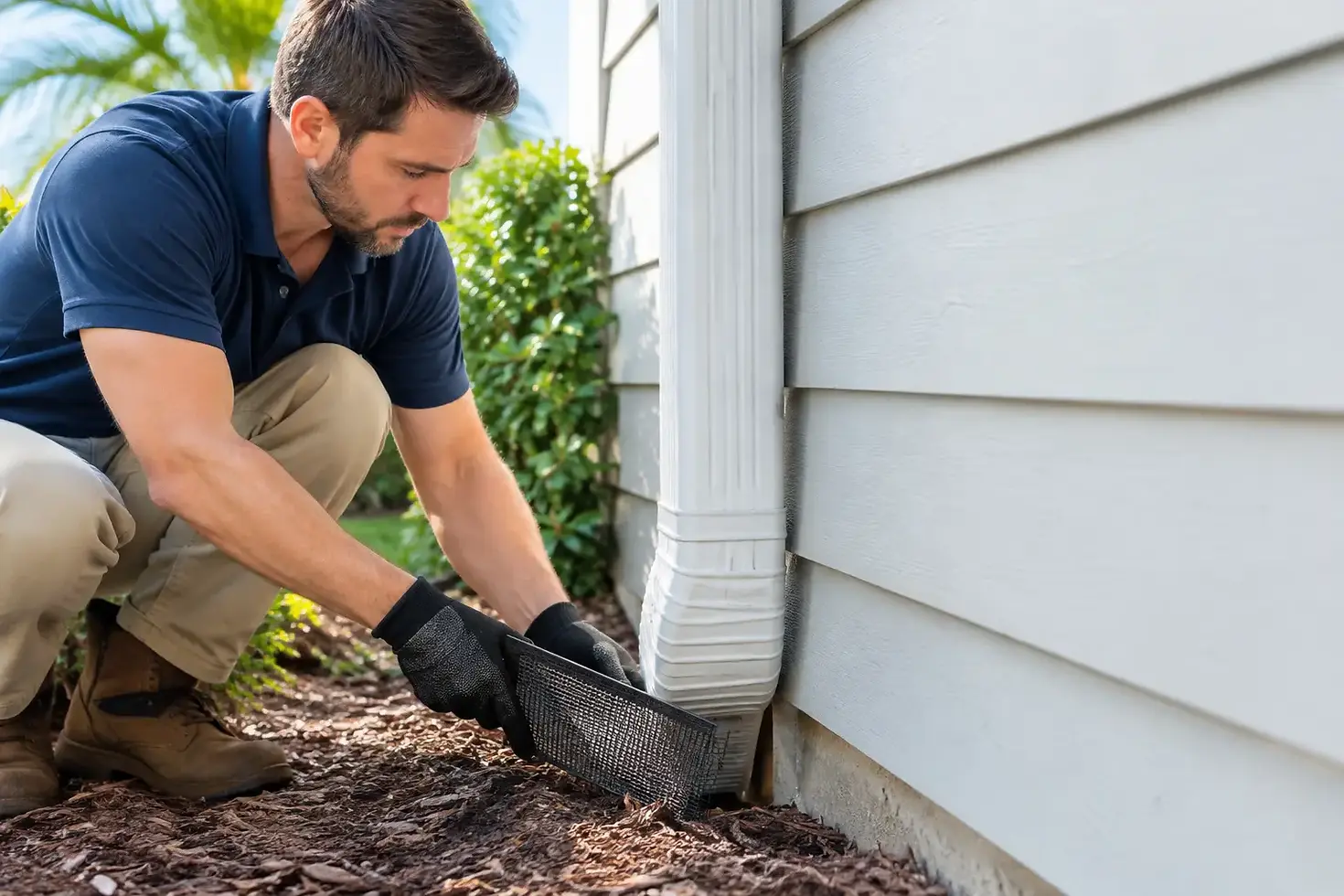
Cover appropriate vents, crawl-space openings, and other vulnerable areas with durable exclusion material that allows necessary airflow. The material and installation method matter. A loose screen or improperly fastened mesh can create another opening rather than solve the problem. For commercial properties, loading areas, utility rooms, and storage buildings often need the same detailed inspection as the main structure.
Do not simply seal an opening if you believe a snake may already be inside a wall void, crawl space, garage, or attic. A certified wildlife inspection can determine the likely route, identify signs of activity, and create a safe plan for removal and exclusion in the right order.
Reduce the Cover That Draws Snakes Close
A tidy landscape will not guarantee that a snake never crosses your property. It can, however, make the area less attractive as a hiding place and make potential activity easier to spot. Snakes prefer protected travel routes and cool, concealed resting areas, especially during periods of heat or heavy rain.
Keep grass trimmed and remove dense piles of leaves, branches, old lumber, stacked pots, and unused materials near the building. Firewood and stored materials should be elevated when possible and kept away from exterior walls. Avoid allowing groundcover, shrubs, or vines to grow tightly against the foundation, where they can hide gaps and create a sheltered pathway.
Pay attention to moisture as well. Repair dripping spigots, leaking irrigation components, and drainage issues that leave standing water near the structure. Clear clutter around pool pumps, air-conditioning units, sheds, and utility equipment. These are common places where shade and cover come together.
This is not about making your landscape bare. Well-maintained landscaping can still be attractive and functional. The practical trade-off is keeping plant beds, mulch, and decorative materials from becoming dense hiding cover directly beside your home or business.
Address the Food Sources Snakes Follow
Most snakes are not entering a property because they are interested in people. They are often following prey, particularly rodents, frogs, and lizards. That is why snake prevention and rodent prevention frequently belong in the same property protection plan.
If you have seen signs of rodents in a garage, attic, crawl space, dumpster area, or storage room, address that problem promptly. Secure trash and keep outdoor storage orderly. Clean up fallen fruit where applicable, and do not leave food waste exposed around patios, break areas, or commercial collection points.
A property can have excellent door sweeps and sealed vents yet still see snake activity if rodents have an easy route in and out. Removing one visible snake without correcting the conditions that attracted it may only provide short-term relief. A full inspection looks at the property as a system: entry points, shelter, moisture, and food sources.
Be Careful With Snake Repellents and DIY Methods
Property owners often ask whether sulfur, mothballs, ultrasonic devices, strong scents, or store-bought snake repellents will keep snakes away. These methods are inconsistent at best and should not be the foundation of your prevention plan. Outdoor rain, heat, irrigation, and normal yard activity quickly reduce the usefulness of many products.
Some DIY approaches can also create avoidable hazards. Do not place chemical products in crawl spaces, near air intakes, or around areas used by children or staff. Do not attempt to smoke out, flush out, trap, or handle a snake yourself. In Florida, misidentifying a snake is easy, and a frightened snake is more likely to defend itself.
The most reliable approach is physical exclusion paired with property maintenance. It takes more effort than scattering a repellent, but it addresses why the snake had access in the first place.
What to Do If a Snake Is Already Inside
If you find a snake indoors, give it space. Keep people away from the immediate area and do not corner it, strike at it, or try to move it with household tools. If it is safe to do so, observe it from a distance so you can tell a wildlife professional where it was last seen and whether it entered a wall, cabinet area, garage, or other enclosed space.
A snake that disappears inside a structure should not be ignored. It may have found a void near plumbing, stored belongings, insulation, or equipment. The right response is a professional assessment of the area, safe removal when needed, and a follow-up inspection for the access point.
This is especially true for businesses, rental properties, and facilities where staff or visitors may encounter the animal unexpectedly. A documented inspection and targeted exclusion plan help protect the property while reducing disruption.
When Professional Snake Exclusion Makes Sense
Professional help is valuable when the entry point is unclear, sightings keep happening, a snake has entered the structure, or the building has multiple vulnerable areas. Older homes, properties near retention ponds, wooded lots, construction zones, and large commercial sites can have more than one route that needs attention.
At American Wildlife Agents, certified wildlife agents approach snake concerns as a complete property-defense issue. That means identifying likely access points, addressing active wildlife safely, recommending repairs, and helping prevent repeat entry rather than charging through a quick removal and leaving the underlying problem behind.
Fear no more: a snake sighting does not have to become a recurring worry. A careful inspection, sound exclusion work, and a cleaner perimeter give your property fewer hiding places and fewer open invitations for wildlife to come inside.



Comments